Lately it seems like we are constantly bombarded with news about artificial intelligence, tariffs, or some disastrous event. While my work involves advocating the use of technology, and I’ve been connected to the computer sector since 1983, I’ve always recognized that it isn’t the answer for everything! Technology can make life easier, but is can also be a pain spot. Sometimes it’s nice to get away. One of the ways I “get away” is by connecting with nature. Lately my wife and I have been researching and finding different parks to go to in order to spot and photograph different wildlife. While this isn’t eliminating technology (the camera), it has several benefits: physical (walking, fresh air), mental (relaxing sounds of nature, relaxing scenes in nature), and just reminding us the world is more than just always in your face technology.
My photography gear is pretty simple, but a bit more advanced than the “point and shoot” Canon A20 digital camera I bought when it was first brand new. My current camera body is a Canon T4i (650D), and because I’m shooting wildlife, I’m almost always leaning on my Canon 55mm-250mm lens. This is actually a pretty affordable setup, especially compared to mirrorless camera setups, but even in the world of DSLR cameras, this is almost as basic as it gets for “bird photography.” My lens is a bit short for many of the shots I’ve attempted, but the next jump up (a Canon 400mm f/5.6L prime lens) is over $1,000CDN at camera shops. It’s a bit more than I want to spend when we have so many other financial commitments. That said, I think the 55-250mm lens is pretty great, I’ve been able to get some photographs that I’m very happy with (some of which are further below). I’m blessed in that I have family that have focused as much on photography, as I have computers, so I have someone to occasionally ask/bug when I have questions.
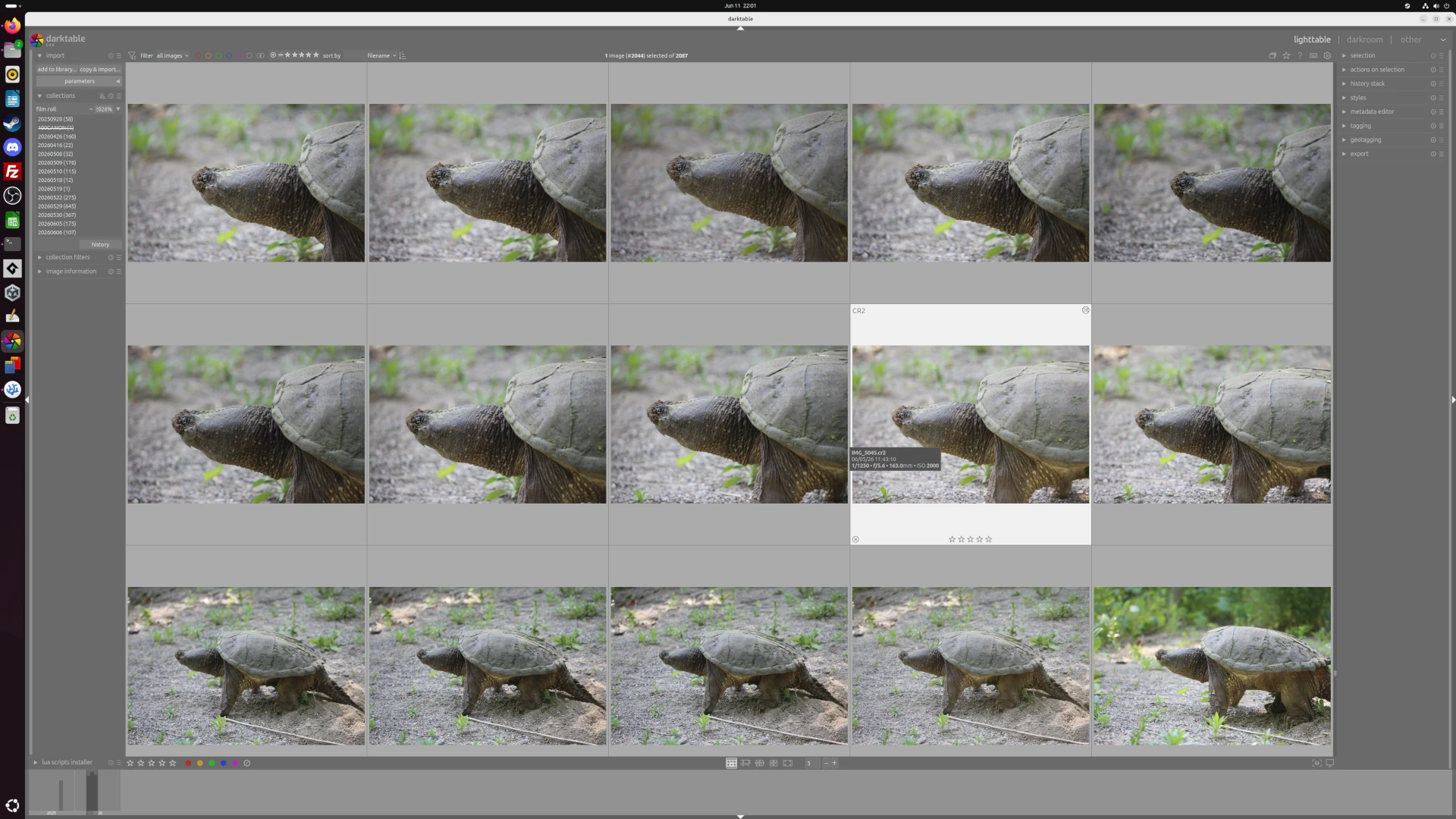
Those who know me, know I use Linux, both at home (Xubuntu, Ubuntu, and Linux Mint) and work (Linux Mint). We don’t have a regular Windows PC at home anymore. So the tools I use for importing and editing photographs might be different from what others use. To import photos I use Rapid Photo Downloader. Rather than connect my camera via the old USB 2 cable, I remove the SDCard and use a Kingston MobileLite G2 adapter to plug the SDCard into the front USB 3.0 port of my desktop PC. I’ve used SDCard adapters that plug in via a USB 3.0 cable, but found I had more problems with those adapters (delays and photos just not downloading). I shoot in RAW mode (vs JPEG), so when I edit my photographs, the edits can be reverse and backed out of. When I first started editing photographs I just used the JPEG format and GIMP (which isn’t bad for simple edits), but I’ve since started using Darktable as my image editor. Another friend, who has been taking photographs a lot longer, swears by RAW Therapee, but I’ve grown attached to Darktable.
But enough about the tools, on with the photographs and why these are a great example of why I like photographing nature, and why I’ve started to enjoy photography more.
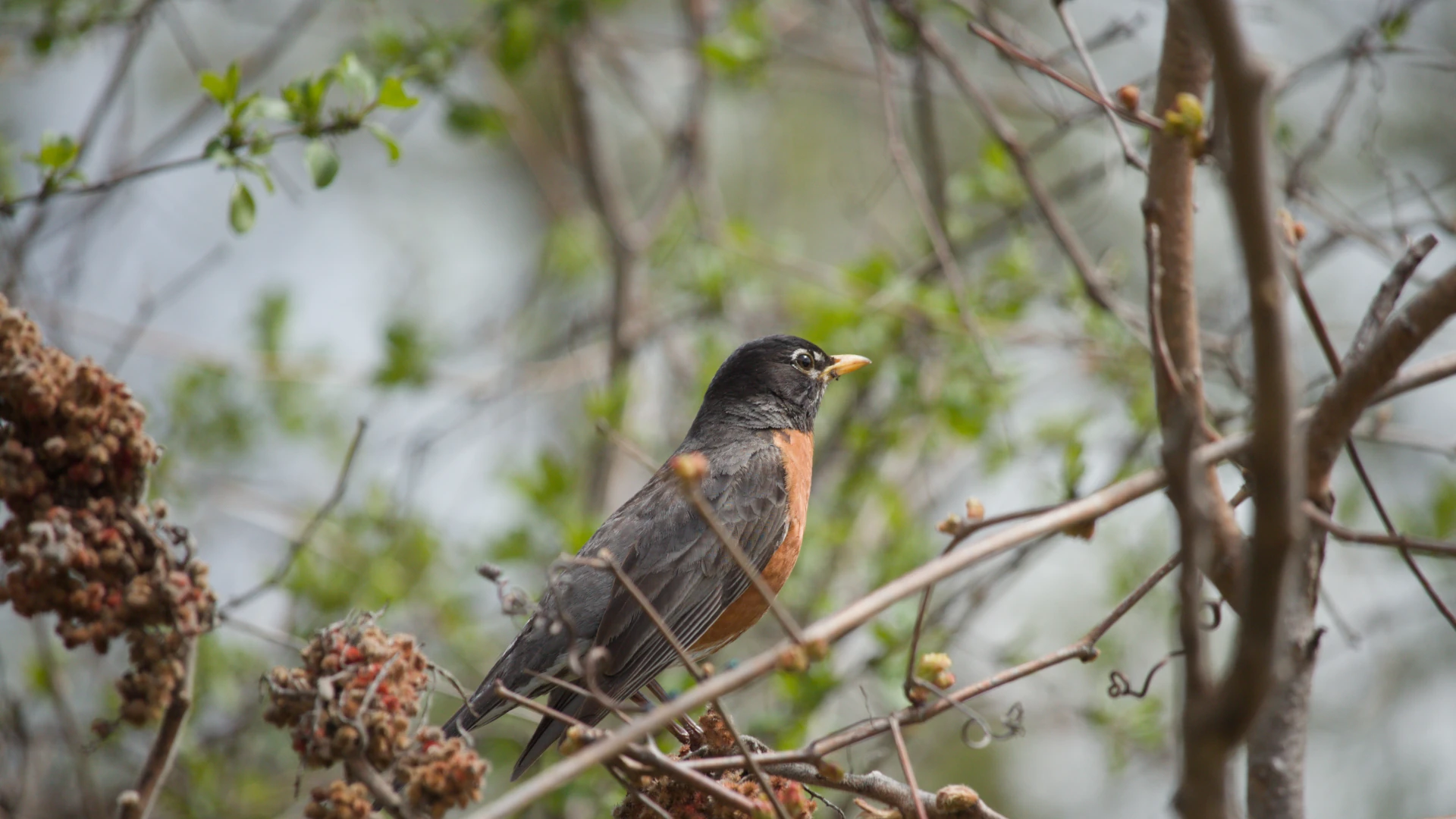 Fig 1. Robin among the trees
The Robin above is my favourite shot I’ve taken of an American Robin. I’ve had the chance to photograph quite a few Robins lately, and I have a few photographs I’m happy with, but this photograph is special because my wife spotted the Robin before I did, first on a bench, and after it flew away, she spotted it again in the tree. At first the Robin was obscured by branches, but it sat long enough, and I was able to move close enough to capture this shot.
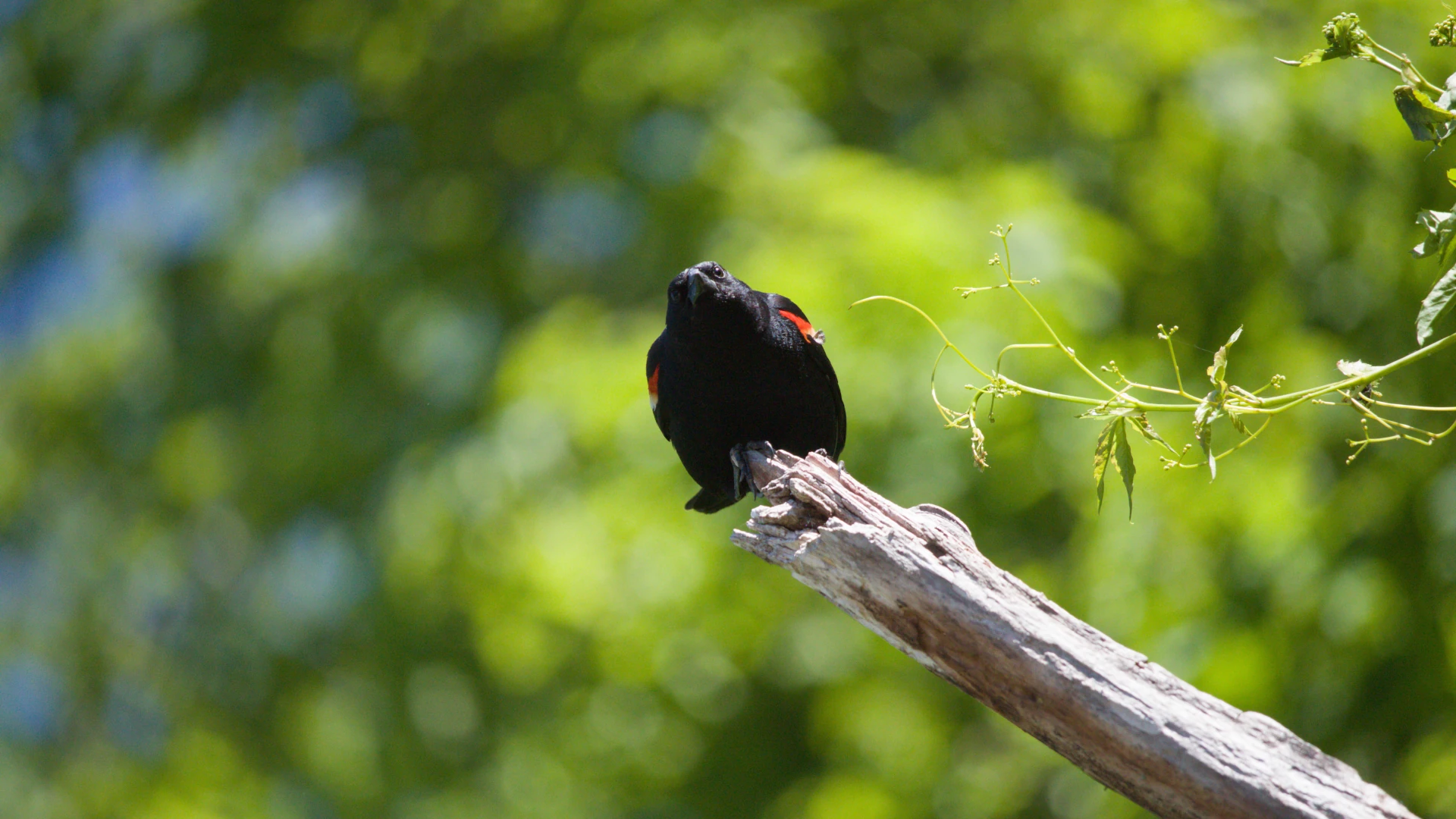 Fig 2. Curious Red-winged Blackbird
My wife and I have seen a lot of Red-winged Blackbirds since we started going out this year, almost more than any other bird, except perhaps the House Sparrow. What made this photograph so special is that it’s almost like the bird was as curious about us as we were about it, and it was far enough away, and not on one of the many bird-feeders in the area, but on a reed. It was a really difficult shot because the day was quite cold, (despite the fact the whole week before was hot), and it was windy, so the reeds were moving. It was a hard shot to get, and while it’s not “tack sharp,” like I would have wished, it’s wonderful considering the conditions, and my skill level.
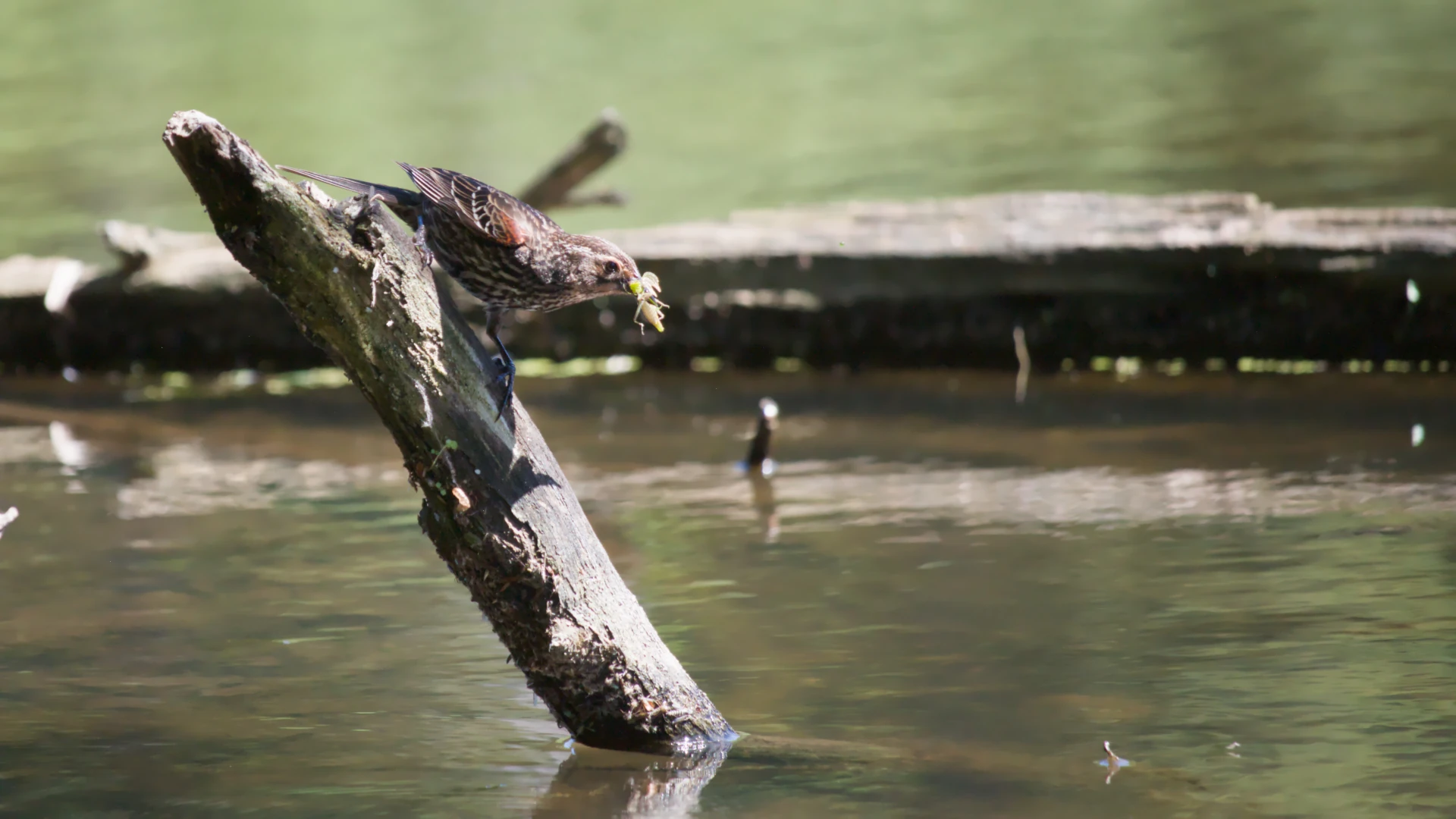 Fig 3. Female Red-winged Blackbird with a bug
The photograph above is anything but sharp, but it’s one of those “slice of life” moments. The photograph is of a female Red-winged blackbird that caught a bug in its beak. The day was a very bright sunny day, and I was patiently waiting near the base of a hill for some baby turtles to climb on a log in the water. The sun was really too bright for me to get a nice photograph of the turtles, the sun was just reflecting off their shells. While I was waiting this female Red-winged Blackbird landed on a log not too far away, and picked up an insect in its beak.
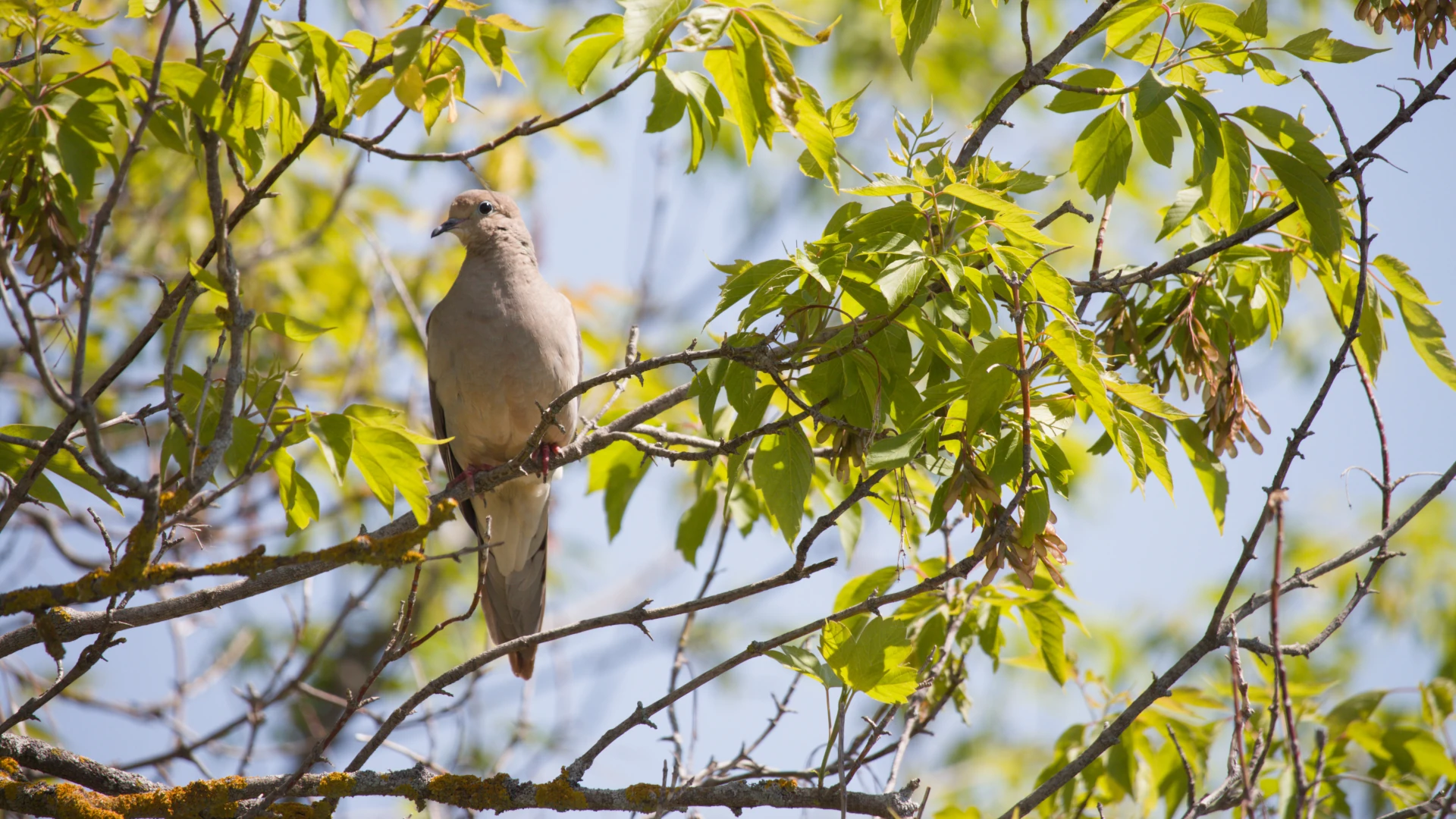 Fig 4. Mourning Dove in a tree
«««< HEAD When I first saw this Mourning Dove fly into a tree, along with its mate, I didn’t think about photographing it. We used to get Pigeons a lot on our balcony, and this looked a lot like some of the pigeons that we’d seen in the past, but I took a few photographs, and when I looked it up I learned that it’s a Mourning Dove (as opposed to a Rock Dove/Pigeon). This reminds me of one of the other things I really love about photographing nature, it helps me better connect with nature. Identifying species of animals is really interesting, especially when you take a photograph which doesn’t necessarily turn out, but it turns out enough that you discover it wasn’t the species you were expecting it was. This photograph just turned out nicer than I expected, and that’s why it’s in this list.
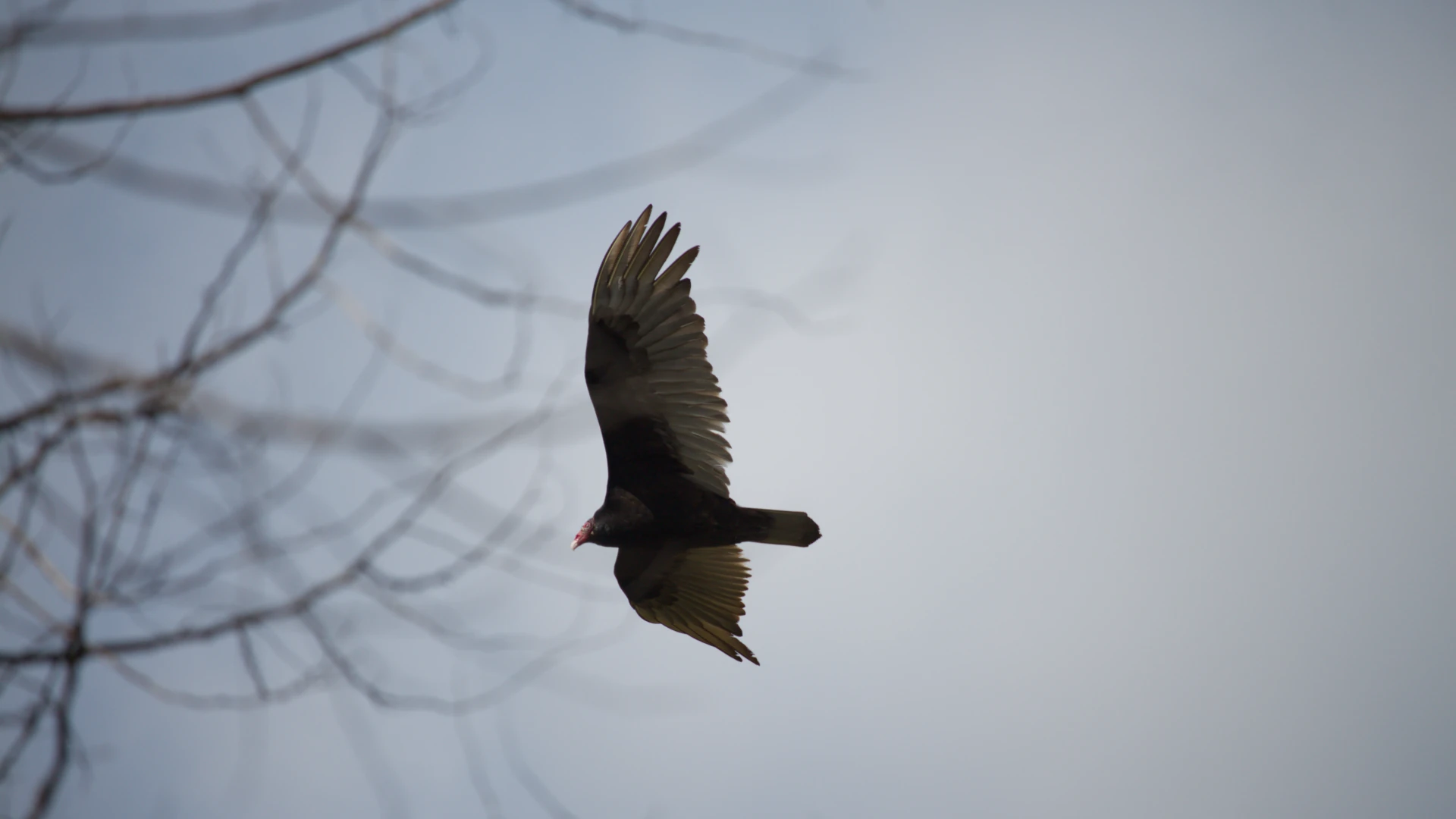 Fig 5. Turkey Vulture flyby
I don’t know of too many people who feel that carrion-eating Turkey Vultures are beautiful, but I love this shot. I’ve been trying to photograph different birds of prey since I owned my Canon A20 PowerShot, and nearly got ripped to shreds at a park (it wasn’t that bad, but I had to jump in the car because the hawk that dove at me seemed pretty serious). My first attempt to photograph a hawk was might have actually happened if I had my current Canon T4i and 55-250mm lens, but the Canon A20 PowerShot and the “telephoto” lens I had for it was never going to get that shot. The hawk was at least 600 meters away, but I guess it wanted no one near its nest. Someone must have disturbed it in the past. Back to the turkey vulture, it flew overhead while we were at a local park. I didn’t think I got a good shot, but the photograph was good enough to identify the bird, so I’m pretty happy with it. I know I will get better shots in the future of other vultures, but I’m not sure I’ll get a chance to photograph one flying like this.
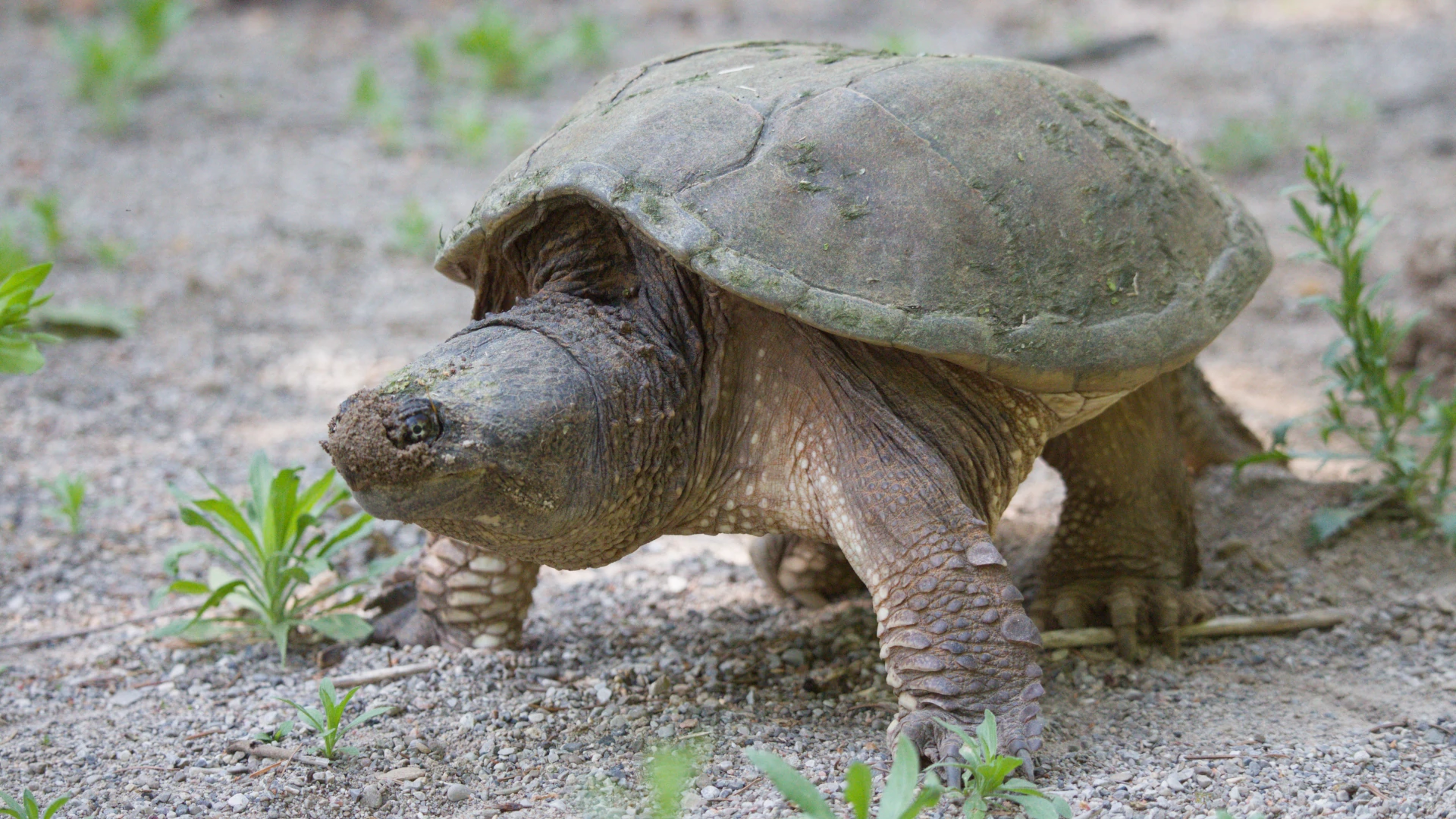 Fig 6. Snapping turtle
Spotting this Snapping Turtle came as a total shock! My wife and I were walking along a park path when I spotted this snapping turtle in a sandy area not too far from the path. I didn’t know it was a snapping turtle when I photographed it, identification came later. We’ve since seen some smaller turtles in the same area, but none that were this size. I’ve seen larger snapping turtles off the side of a boat in the past, but what I love about this shot is that I was able to take my time and get close enough to get an okay shot of the turtle.
When I first saw this Mourning Dove fly into a tree, along with its mate, I didn’t think about photographing it. We used to get Pigeons a lot on our balcony, and this looked a lot like some of the pigeons that we’d seen in the past, but I took a few photographs, and when I looked it up I learned that it’s a Mourning Dove (as opposed to a Rock Dove/Pigeon). This reminds me of one of the other things I really love about photographing nature, it helps me better connect with nature. Identifying species of animals is really interesting, especially when you take a photograph which doesn’t necessarily turn out, but it turns out enough that you discover it wasn’t the species you were expecting it was. This photograph just turned out nicer than I expected, and that’s why it’s in this list.
Fig 5. Turkey Vulture flyby
I don’t know of too many people who feel that carrion-eating Turkey Vultures are beautiful, but I love this shot. I’ve been trying to photograph different birds of prey since I owned my Canon A20 PowerShot, and nearly got ripped to shreds at a park (it wasn’t that bad, but I had to jump in the car because the hawk that dove at me seemed pretty serious). My first attempt to photograph a hawk was might have actually happened if I had my current Canon T4i and 55-250mm lens, but the Canon A20 PowerShot and the “telephoto” lens I had for it was never going to get that shot. The hawk was at least 600 meters away, but I guess it wanted no one near its nest. Someone must have disturbed it in the past. Back to the turkey vulture, it flew overhead while we were at a local park. I didn’t think I got a good shot, but the photograph was good enough to identify the bird, so I’m pretty happy with it. I know I will get better shots in the future of other vultures, but I’m not sure I’ll get a chance to photograph one flying like this.
Fig 6. Snapping turtle
Spotting this Snapping Turtle came as a total shock! My wife and I were walking along a park path when I spotted this snapping turtle in a sandy area not too far from the path. I didn’t know it was a snapping turtle when I photographed it, identification came later. We’ve since seen some smaller turtles in the same area, but none that were this size. I’ve seen larger snapping turtles off the side of a boat in the past, but what I love about this shot is that I was able to take my time and get close enough to get an okay shot of the turtle.
32057dd4c8dbaa1cdb61ba5c5274360b868b70bf
While we generally visit parks to spot birds, we’ve had some success spotting other interesting animals: deers, goats, turtles, frogs, and even a mink! Connecting with nature is a lot of fun. While I could do things like use various apps on my phone to identify animals, I don’t like to do that because it doesn’t seem as meaningful. I’d rather take a few photographs, and enjoy the moment, then identify the animals when I get home. Identifying them at home I can spend a bit more time researching, without taking away from the animal’s moment.